Sculptra vs Radiesse: Which Biostimulator is Right for You?
- Medically Reviewed by Dr. Salma Ben Cheikh, MD | DHA & DOH Certified Plastic Surgeon

Sculptra vs Radiesse: At a Glance
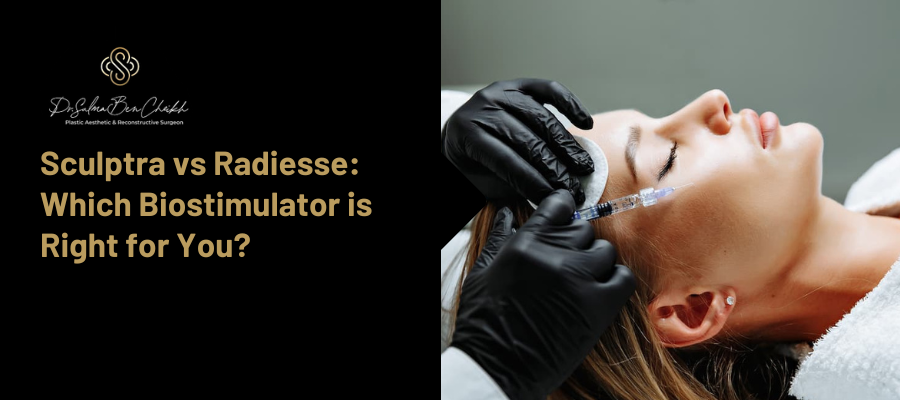
If you’re exploring biostimulator injections for face, these two are probably at the top of your list. Here’s a fast snapshot before we go deeper:
- Sculptra (Poly-L-lactic acid / PLLA): a gradual collagen builder that restores overall facial volume softly over several weeks. Best for temples, hollow cheeks, and diffuse fullness. Results emerge over 4–6 weeks and can last up to 2 years.
- Radiesse (Calcium Hydroxylapatite / CaHA) gives an immediate structural lift on day one while continuing to build collagen over the next 8–12 weeks. Best for sharp contouring of the jawline, chin, and deep folds. Results typically last 12–18 months.
- Both are collagen-boosting injections, not traditional hyaluronic acid fillers, meaning they work with your biology rather than simply filling space.
- Neither is universally “better.” The right choice depends on your anatomy, goals, and timeline.
Why is Everyone Talking About Biostimulators?
Walk into any aesthetic clinic today and you’ll probably hear the term “biostimulator” come up. These treatments are becoming popular because many patients want results that look natural and last longer than traditional fillers.
Unlike standard hyaluronic acid fillers, which mainly add volume right away, biostimulators help your skin produce more of its own collagen over time. That means the skin can gradually look firmer, fuller, and healthier.
Sculptra and Radiesse are the two best-known biostimulators. They represent what modern non-surgical facial rejuvenation injections can do when the goal is tissue quality, not just a quick fill. But because they work differently, choosing between them isn’t always obvious, and that’s exactly where most patients get stuck.
Some people want gradual, soft volume restoration. Others want more immediate structure and contour. Understanding the difference between Sculptra and Radiesse can help you choose the treatment that fits your face, your timeline, and the kind of result you want.
Book An Appointment
What is Sculptra: The Slow and Natural Builder
Sculptra is made with Poly-L-lactic acid (PLLA), a material that has been safely used in medicine for many years, including in dissolvable stitches.
Instead of creating instant volume, Sculptra works by encouraging your skin to make more of its own collagen over time. This means the results appear gradually and tend to look very natural.
Rather than looking suddenly “done,” patients usually notice slow improvements in fullness, skin quality, and facial support over several weeks.
This makes Sculptra particularly well-suited for:
- Global volume loss, such as hollow temples, sunken mid-cheeks, and generalized facial deflation that comes with age
- Patients who want subtle, progressive results that people around you notice without being able to pinpoint why
- Anyone looking for results that ease in rather than appear overnight
It is sometimes called a slow-build treatment because results develop gradually. Most patients start seeing visible improvement about 4–6 weeks after treatment, and a full plan usually includes 2–3 sessions spaced a few weeks apart.
One of the biggest advantages is longevity, with results that can last up to 2 years in many patients.
What is Radiesse: The Instant Sculptor
Radiesse works differently. Its active ingredient is Calcium Hydroxylapatite (CaHA), a mineral-like microsphere suspended in a smooth gel carrier.
The gel provides immediate volume and structure as soon as the treatment is done. Then, over the next few months, the CaHA particles help stimulate new collagen production under the skin.
So with Radiesse, you’re getting a two-phase result:
- Immediate lift and contouring
- Longer-term collagen support
Radiesse is especially useful for:
- Defined contouring, i.e., sharpening the jawline, building a more projected chin, and smoothing nasolabial folds
- Patients who have a specific structural target and want a visible change quickly
- Areas where firmness and support matter more than soft volume
Most patients achieve their contouring goals in 1–2 sessions, and results typically last 12–18 months depending on the area treated and individual metabolism.
Side-by-Side Comparison: Sculptra vs Radiesse
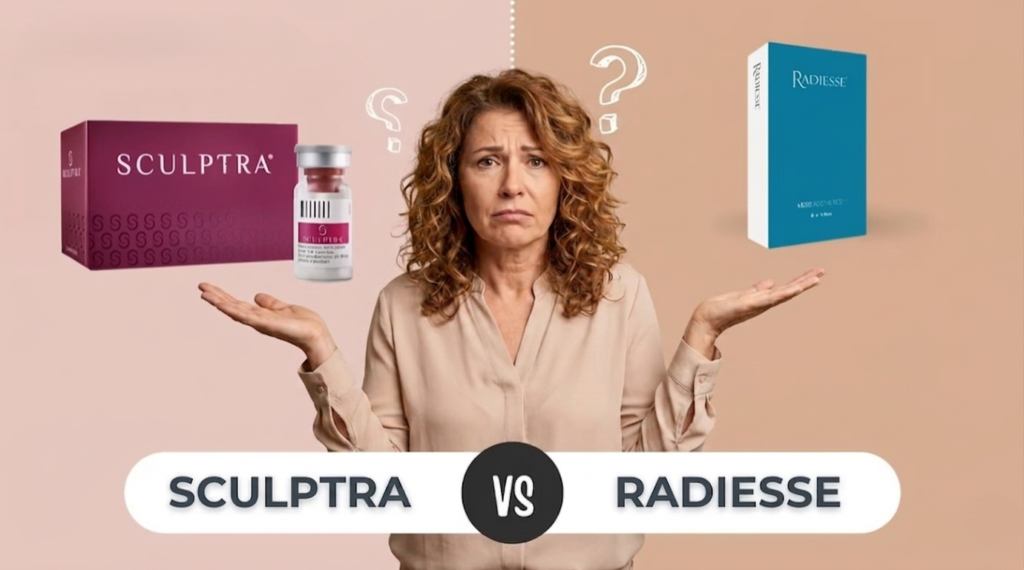
The difference between Sculptra and Radiesse comes down to mechanism, immediacy, and the type of result you’re after.
Here is a clear breakdown:
Feature | Sculptra | Radiesse |
Active ingredient | Poly-L-lactic acid (PLLA) | Calcium Hydroxylapatite (CaHA) |
Immediate results | Calcium Hydroxylapatite (CaHA) | Yes, visible instantly |
Best for | Diffuse hollows, cheeks, temples, overall thinning skin | Sharp definition, jawlines, chins, deep folds |
Treatment timeline | Typically 2–3 sessions, spaced 4–6 weeks apart | Typically 1–2 sessions, depending on structural needs |
Result lifespan | Up to 2 years or more | Around 12-18 months |
Both products can look very natural when injected correctly, but the treatment strategy differs significantly.
Cost Breakdown: Sculptra vs Radiesse Cost
Sculptra vs Radiesse cost is one of the most Googled questions in this space, and the honest answer is: it varies too much per patient to quote a meaningful flat number.
Your total treatment cost depends on several factors, including:
- How much volume loss needs to be corrected
- The number of syringes or vials required
- Which areas of the face are being treated
- How many treatment sessions are needed
- The experience and expertise of the injector
- The clinic’s location and treatment approach
On a per-session basis, the cost of a single vial of Sculptra and a single syringe of Radiesse can fall in a comparable range. But because Sculptra requires more sessions upfront, the total treatment cost can be higher, though spread over a longer maintenance cycle.
The real question isn’t which one is cheaper. It’s which one gets you where you want to go, safely and effectively.
Which Biostimulator is Actually Right for You?
If your goal is to look more structured and defined: a sharper jaw, a more lifted chin, smoother deep folds, and you want to see that change quickly, Radiesse is likely your match.
If you’re dealing with overall facial hollowing, that sunken, tired look that makes you look older than you feel, and you want a result that builds naturally over time, Sculptra is the better tool.
And for many patients? The answer is both: Sculptra for the cheeks and temples, Radiesse for the lower face. Used strategically in different treatment zones, they can complement each other beautifully.
Why Does Choosing the Right Injector Matters?
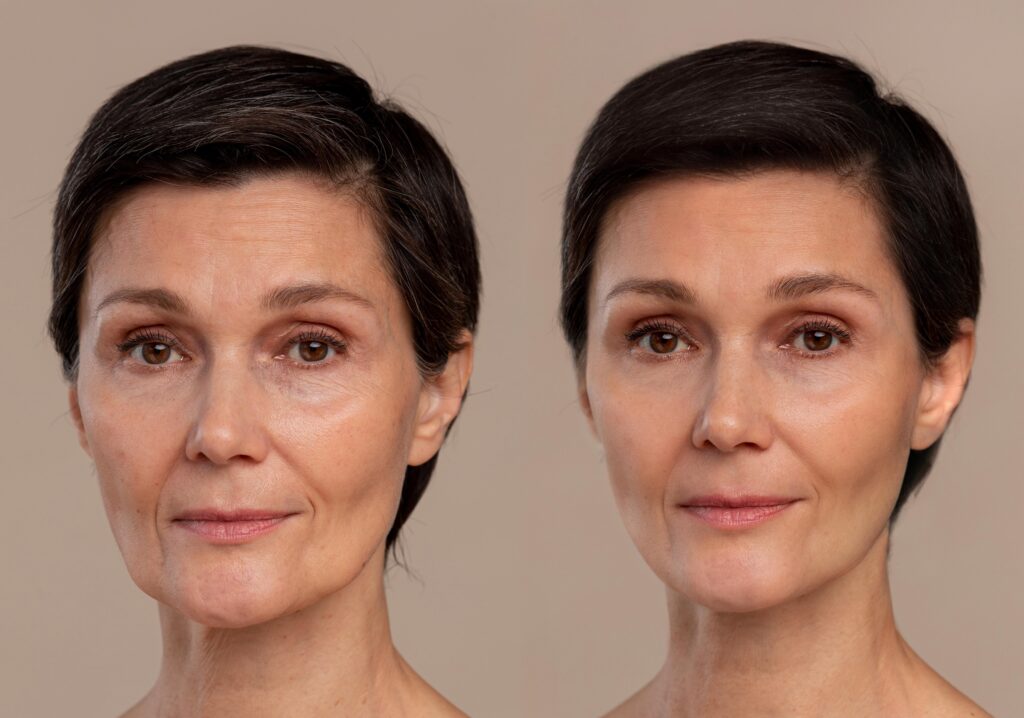
Biostimulator treatments are technique-sensitive procedures. Product placement, dilution, depth, and facial anatomy all affect the final result.
Because these injectables stimulate your own collagen rather than simply adding temporary volume, corrections are not as easily reversible as standard hyaluronic acid fillers. That makes choosing an experienced provider especially important.
Dr. Salma Cheikh focuses on individualized aesthetic planning based on facial structure, skin quality, and long-term balance rather than one-size-fits-all trends.
As a board-certified plastic surgeon in Dubai and Abu Dhabi, Dr. Salma Cheikh emphasizes careful assessment before treatment selection. Some patients benefit more from soft collagen rebuilding with Sculptra, while others need the sharper structural support that Radiesse provides.
In many cases, a customized combination approach offers the best outcome.
Booking a professional consultation for dermal fillers and biostimulators with an expert injector for biostimulators is the safest way to determine which option matches your anatomy and aesthetic goals.
FAQs
Yes. Because they serve different purposes, they can be used during the same overall treatment plan in different areas of the face. For instance, an injector might use Sculptra to add soft volume to hollow temples and outer cheeks, while using Radiesse to create a sharp, defined jawline and chin.
No, not in the same way as hyaluronic acid fillers. Since these products stimulate your body’s own collagen production, they cannot simply be dissolved. This is why treatment should always be performed by an experienced medical professional.
Most patients experience mild swelling, redness, tenderness, or bruising for a few days. Normal activities can usually be resumed quickly, although aftercare instructions vary depending on the treatment plan.
Yes, you can use different products over time, but you must wait until the previous product has fully settled and integrated into the tissue. Your injector will evaluate your treatment history to ensure that switching products is safe and will not interfere with your existing collagen structure.
Collagen boosting injections like Sculptra and Radiesse help your skin produce collagen over time for gradual, natural-looking results. Traditional fillers give more immediate volume. The best option depends on your goals and treatment areas.
About the Author
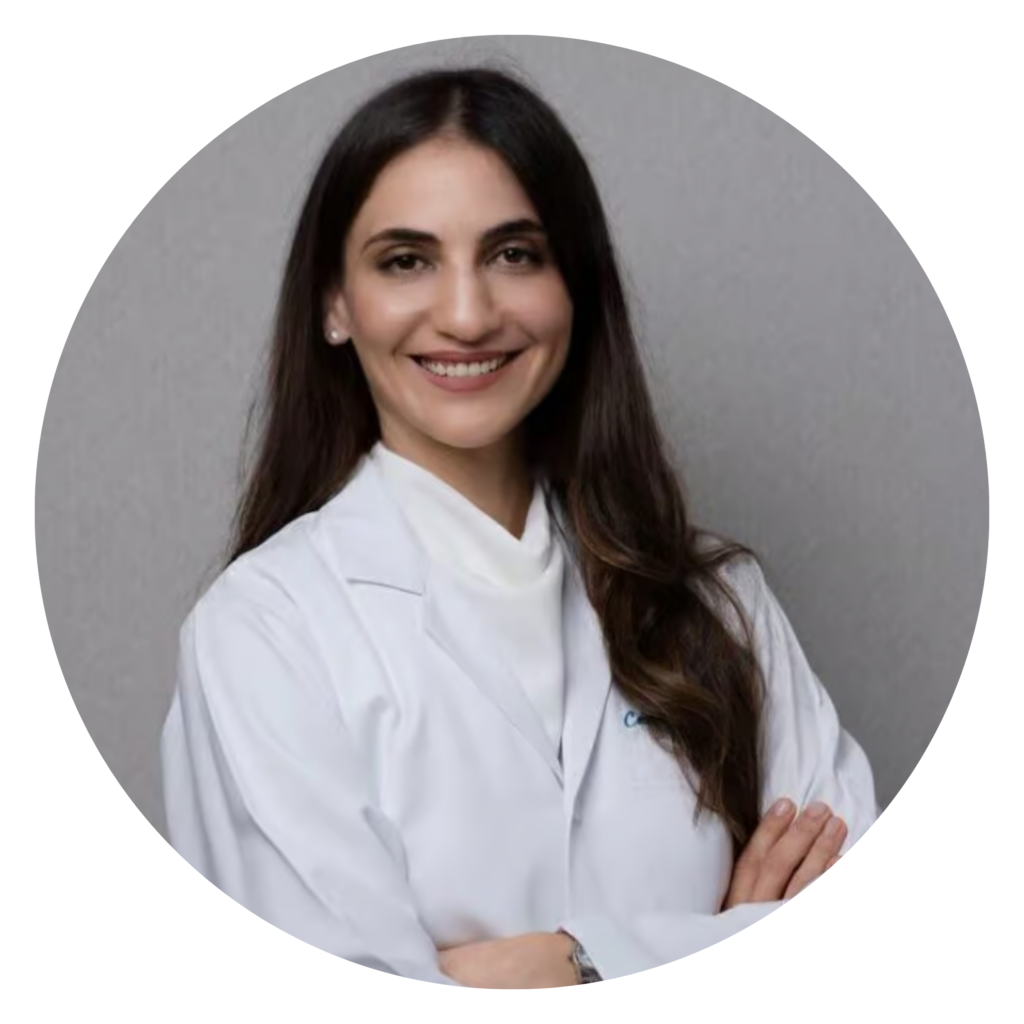
Dr. Salma Ben Cheikh, MD
Specialist Plastic Surgeon
MD, Medical School of Tunis, Plastic Reconstructive and Aesthetic Surgery
12+ years of experience
DOH License No. - GD46470
DHA License No.- 62492329
MOH License No.- D78505.
Dr. Salma Cheikh is a board-certified specialist in plastic, aesthetic, and reconstructive surgery, recognized for her expertise in advanced cosmetic and reconstructive procedures in the UAE. With over 12 years of experience and international training in France and Tunisia, she combines surgical precision with a patient-first philosophy focused on natural, harmonious results.
Practicing in Dubai and Abu Dhabi, Dr. Salma specializes in facial rejuvenation, breast surgery, body contouring, aesthetic gynecology, and regenerative aesthetic treatments. Her approach emphasizes subtle enhancements, safety, and personalized care tailored to each patient’s unique anatomy and goals.
Trained at renowned institutions including Saint Louis Hospital Paris, Institut Gustave Roussy, and Paris-Saclay University, Dr. Salma brings advanced European techniques and artistic refinement to every procedure. She is fluent in Arabic, English, and French, helping patients from diverse backgrounds feel comfortable and confident throughout their journey.
Medical Disclaimer
This article is for informational purposes only and is not a substitute for professional medical advice, diagnosis, or treatment. Always seek the advice of a qualified health provider with any questions you may have regarding a medical condition.
Medically reviewed by Dr. Salma Ben Cheikh.