What are the Applications of Nanofat in Plastic Surgery?
- Medically Reviewed by Dr. Salma Ben Cheikh, MD | DHA & DOH Certified Plastic Surgeon

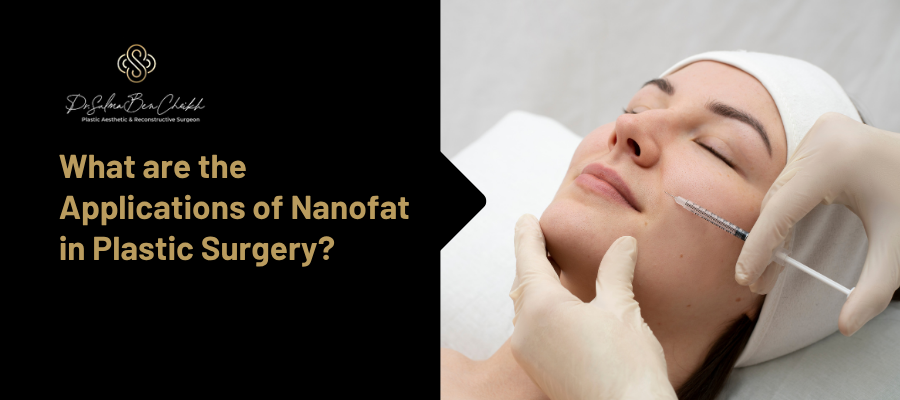
Advances in regenerative medicine have transformed the way we approach aesthetic and reconstructive procedures. One such development is nanofat, a refined form of fat grafting that focuses not on adding volume but on improving skin quality at a cellular level.
For patients in Dubai who are looking for subtle, natural rejuvenation with their own tissue, understanding the role of nanofat is essential.
This blog explains what nanofat is, how it works, and where it is applied in plastic surgery, based strictly on established clinical concepts discussed in regenerative fat grafting literature.
What is Nanofat?
To understand what is nanofat, it helps to first understand traditional fat grafting. In conventional fat transfer, fat is harvested from one area of the body and injected into another to restore lost volume.
Nanofat is different.
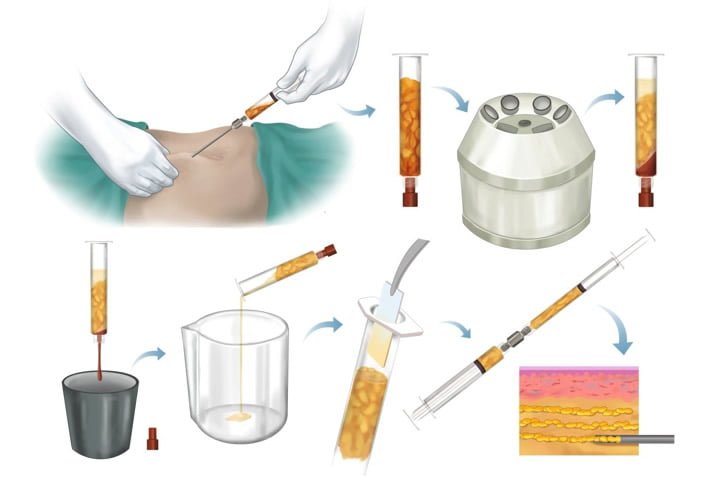
In a nanofat procedure, the harvested fat is gently processed using mechanical emulsification and filtration techniques. This step separates and eliminates the intact fat cells while retaining the essential regenerative components, particularly those responsible for supporting tissue repair and skin revitalization.
- Adipose-derived stem cells
- Stromal vascular fraction
- Growth factors
The result is a liquid suspension rich in regenerative cells, designed not for volume enhancement, but for skin regeneration and tissue repair.
This forms the foundation of nanofat stem cell rejuvenation, stimulating the body’s own healing and collagen production mechanisms.
How Nanofat Works?
Unlike dermal fillers that physically fill wrinkles, nanofat treatment works biologically.
Once injected, the regenerative cells release growth factors that:
- Stimulate collagen production
- Improve blood supply in treated areas
- Enhance skin elasticity
- Support tissue repair
With time, patients see visible results, experiencing smoother skin texture and a healthy, even skin tone. These changes do not appear instantly, as the improvement happens gradually through regenerative activity occurring deep at the cellular level.
Key Applications of Nanofat in Plastic Surgery
1. Facial skin rejuvenation
One of the most common uses of nanofat injection is facial rejuvenation.
It is particularly effective for:
- Fine wrinkles around the eyes and mouth
- Thin, crepey lower eyelid skin
- Dark circles
- Mild skin laxity
- Dull or sun-damaged skin
Because nanofat improves dermal quality rather than adding bulk, it is ideal for delicate areas where traditional fillers may appear heavy.
2. Treatment of dark circles
Under-eye hollowness and pigmentation are challenging to treat. Nanofat, when injected superficially, can enhance skin thickness and improve the appearance of dark circles through regenerative mechanisms rather than camouflage.
This approach is exceptionally well-suited for individuals who want gentle and natural enhancement.
3. Scar improvement
Research continues to show that nanofat grafting may help in scar healing and management.
It may help improve:
- Acne scars
- Surgical scars
- Traumatic scars
- Post-burn scarring
By stimulating collagen remodeling and improving vascularity, nanofat can soften scar texture and improve skin flexibility.
4. Skin quality enhancement in the neck and hands
The neck and hands often reveal ageing earlier than the face. Nanofat treatment may improve:
- Fine wrinkling
- Skin thinning
- Sun damage
- Poor elasticity
Because these areas require refined techniques, nanofat’s liquid consistency makes it particularly useful.
5. Adjunct to breast surgery
In selected cases, nanofat grafting after breast augmentation may be used to improve:
- Scar quality
- Soft tissue coverage
- Skin texture around surgical sites
It does not replace structural fat grafting, but it can support tissue healing and aesthetic refinement.
Overview of the Nanofat Procedure
A typical nanofat procedure includes:
- Consultation and assessment
Evaluation of skin quality and suitability. - Fat harvesting
A small amount of fat is removed under local anesthesia from areas such as the abdomen or thighs. - Processing
The fat is mechanically emulsified and filtered until a smooth, cell-rich liquid remains. - Injection
The nanofat is carefully injected into the targeted superficial layers.
The procedure is usually performed under local anesthesia and is considered minimally invasive.
Recovery and Expected Results
After nanofat injection, patients may experience:
- Mild swelling
- Minor bruising
- Temporary tenderness
These typically resolve within a few days.
Results appear gradually over weeks as regenerative processes stimulate collagen production. Improvements in skin quality may continue for several months.
It is essential to understand that nanofat is not a lifting procedure. It enhances skin quality but does not replace surgical tightening when significant sagging is present.
Who is a Suitable Candidate?
Nanofat may be suitable for:
- Patients with early signs of skin ageing
- Individuals with fine wrinkles rather than deep folds
- Patients with acne scars or textural irregularities
- Those seeking natural rejuvenation using their own tissue
A detailed clinical assessment is necessary to determine suitability.
Risks and Considerations
Because nanofat uses the patient’s own tissue, allergic reactions are extremely uncommon. However, as with any procedure, potential risks include:
- Swelling
- Bruising
- Temporary unevenness
- Infection (rare when performed under sterile conditions)
Selecting an experienced plastic surgeon helps increase the accuracy of the treatment it ensuring safe technique and proper placement.
Nanofat as a Refined Regenerative Solution in Contemporary Plastic Surgery
Nanofat is an advanced form of fat grafting that emphasizes tissue regeneration instead of adding volume. Because it contains a high concentration of stem cells and growth factors, nanofat treatment can enhance skin texture, aid in scar improvement, and gently refine delicate areas such as the under-eye region.
For patients in Dubai Dr. Salma Cheikh offers a subtle, biologically driven rejuvenation, nanofat option.
If you are considering regenerative skin rejuvenation, schedule a personalized consultation with Dr. Salma Cheikh
About the Author
Dr. Salma Ben Cheikh, MD
Specialist Plastic Surgeon | MD, Medical School of Tunis, Plastic Reconstructive and Aesthetic Surgery | 12+ years of experience | DOH License No. – GD46470 | DHA License No.- 62492329 | MOH License No.- D78505
Dr. Salma Ben Cheikh is a board-certified specialist in plastic, aesthetic, and reconstructive surgery, recognized for her expertise in advanced cosmetic and reconstructive procedures in the UAE. With over 12 years of experience and international training in France and Tunisia, she combines surgical precision with a patient-first philosophy focused on natural, harmonious results.
Practicing in Dubai and Abu Dhabi, Dr. Salma specializes in facial rejuvenation, breast surgery, body contouring, aesthetic gynecology, and regenerative aesthetic treatments. Her approach emphasizes subtle enhancements, safety, and personalized care tailored to each patient’s unique anatomy and goals.
Trained at renowned institutions including Saint Louis Hospital Paris, Institut Gustave Roussy, and Paris-Saclay University, Dr. Salma brings advanced European techniques and artistic refinement to every procedure. She is fluent in Arabic, English, and French, helping patients from diverse backgrounds feel comfortable and confident throughout their journey.
Medical Disclaimer
This article is for informational purposes only and is not a substitute for professional medical advice, diagnosis, or treatment. Always seek the advice of a qualified health provider with any questions you may have regarding a medical condition.
Medically reviewed by Dr. Salma Ben Cheikh.