Breast Reduction Scars: What to Expect & How to Minimize Them
- Medically Reviewed by Dr. Salma Ben Cheikh, MD | DHA & DOH Certified Plastic Surgeon

Breast Reduction Scars: At a Glance
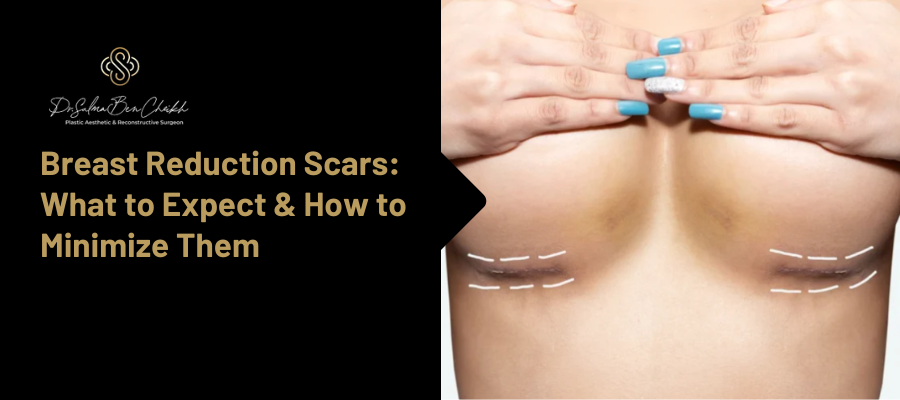
- Breast reduction scars are an expected part of surgery; how visible they become depends largely on technique, genetics, and how well you follow your aftercare plan.
- The most common breast reduction scar patterns include anchor (inverted-T), lollipop (vertical), and donut (periareolar) scars.
- Most scars appear pink or red at first, then gradually soften and fade over 12 to 18 months.
- Proper aftercare, including silicone scar therapy and sun protection, can help improve scar appearance.
- Dr. Salma Cheikh, practicing at CosmeSurge in Dubai and Abu Dhabi, tailors each incision plan to minimize breast reduction scarring location and maximize natural results.
If you are considering breast reduction surgery, it is completely normal to look forward to the potential relief it can bring while also feeling concerned about the scars that may remain afterwards.
Making the choice to undergo this life-changing procedure brings up natural questions about how your body will heal and where your incisions will be placed.
To help guide you through your recovery with absolute clarity, board-certified specialist plastic, aesthetic and reconstructive surgeon in Dubai, Dr. Salma Cheikh shares her clinical insights on what to expect from the healing process.
Book An Appointment
Common Breast Reduction Scar Patterns & Locations
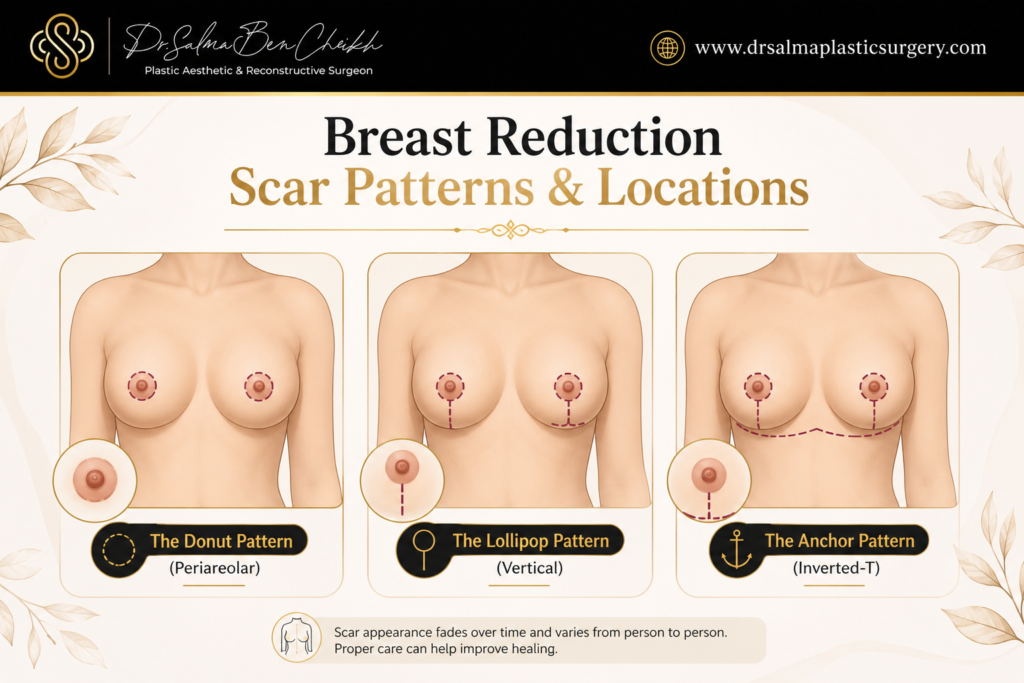
The specific technique used during your breast reduction surgery depends entirely on your unique anatomy, the degree of sagging, and the amount of tissue to be removed.
During your personal consultation, the exact breast reduction scarring location will be mapped out clearly. The three primary incision patterns used in standard plastic surgery include:
1. The Donut Pattern (Periareolar)
This technique uses one circular incision placed around the edge of the nipple, where the darker skin meets the lighter breast skin.
It is usually recommended for small breast reductions or mild lifting. Because the scar follows the natural border of the nipple, it is often the least noticeable option after healing.
2. The Lollipop Pattern (Vertical)
This method utilizes two specific incision lines:
- One around the edge of the nipple.
- One running straight down from the nipple to the breast crease.
The shape resembles a lollipop. It is often chosen for moderate breast reductions because it allows for good reshaping without a long scar under the breast.
3. The Anchor Pattern (Inverted-T)
This is the most common technique for larger breast reductions or significant lifting. It uses three incisions:
- Around the nipple.
- Straight down to the breast fold.
- Along the natural crease under the breast.
Although this pattern creates more scarring, the horizontal scar usually stays hidden within the natural fold beneath the breast.
What Determines the Type of Breast Reduction Scars You’ll Have?
Two patients can have identical surgery and heal very differently. Several factors shape how your breast reduction scars develop:
- Skin type and genetics: Some people are naturally more prone to developing thicker, raised, or darker scars.
- Amount of tissue removed: Larger breast reductions usually require longer incisions and more scar care.
- Surgical technique: The way the incisions are placed and closed can affect how neatly scars mature.
- Smoking: Reduced blood flow can slow healing and increase the risk of more noticeable scarring.
- Sun exposure: Fresh scars can darken if exposed to UV light, particularly during the first year.
- Aftercare: Consistent scar care and following your surgeon’s instructions can improve healing results.
Both products can look very natural when injected correctly, but the treatment strategy differs significantly.
The Breast Reduction Scars Timeline: What to Expect?
Healing isn’t linear, but it does follow a predictable pattern. Understanding the breast reduction scars timeline helps you stay realistic and patient throughout recovery.
Week 1-2: The incisions closing
Your incisions are closed with sutures and protected by surgical tape or dressings. It is normal for the area to appear pink, slightly raised, swollen, or bruised as the body begins the early stages of healing.
Weeks 3-6: Active healing
The body produces new collagen to repair the wound. During this stage, scars often become darker, firmer, or slightly raised before they begin to improve.
Months 2-3: Transition phase
Scar lines become more defined. Once the skin has fully healed, silicone treatments and gentle massage may be recommended. Mild itching is common.
Months 3-6: Peak appearance
Scars are often at their most noticeable, appearing pink and slightly raised. Although this can be discouraging, it is a normal part of scar maturation.
Months 6-12: Visible fading
Scars gradually flatten, soften, and lighten in colour as healing continues. Most become far less noticeable over time.
Months 12-18+: Maturation
For most patients, scars reach their final appearance somewhere between 12 and 18 months. In many cases, the lines are flat, soft, and pale enough that they’re not noticeable in everyday clothing or swimwear. Full maturation can take up to two years in some individuals.
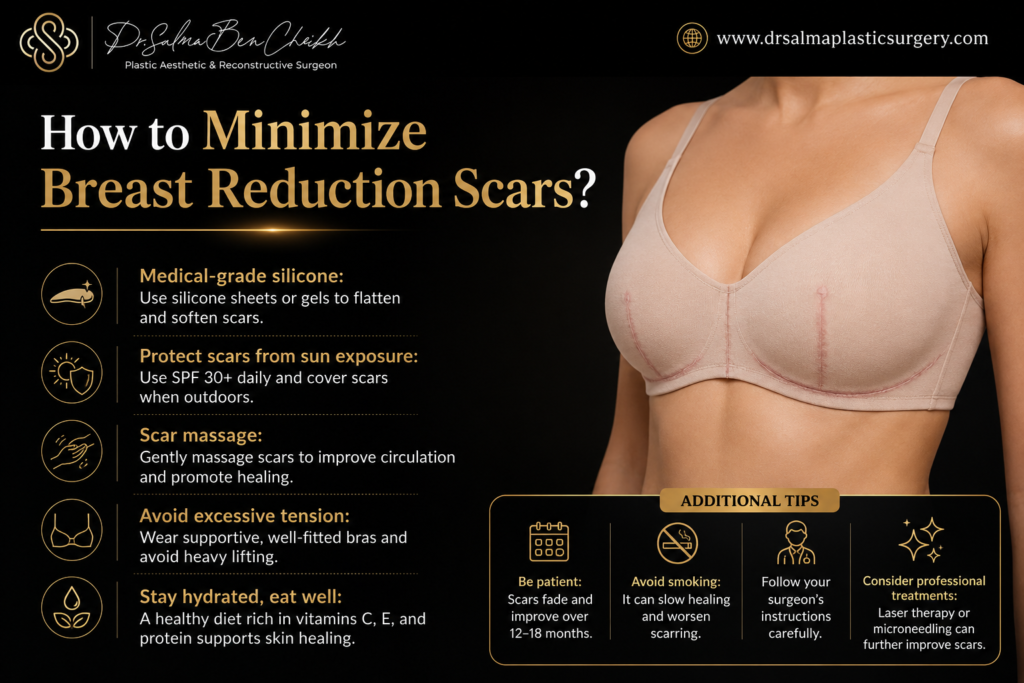
How to Minimize Breast Reduction Scars?
Scar care plays a major role in the final appearance of healing incisions.
- Medical-grade silicone: Silicone sheets or gels help keep scars hydrated, softer, and less raised during healing.
- Protect scars from sun exposure: New scar tissue is incredibly sensitive to ultraviolet (UV) light. Keep the area covered and apply a broad-spectrum SPF 50 sunscreen daily for at least a year.
- Scar massage: Gentle massage, once approved by your surgeon, may help soften firm scar tissue and improve texture.
- Avoid excessive tension: Avoid heavy lifting or strenuous upper-body workouts during your early recovery weeks. Stretching the healing skin prematurely can widen your final lines.
- Stay hydrated, eat well: Staying hydrated and eating enough protein and vitamins helps support healthy skin healing.
Why Choose Dr. Salma Cheikh for Breast Reduction?
Choosing the right plastic surgeon can significantly influence both surgical results and scar quality.
Dr. Salma Cheikh is an internationally trained specialist plastic, aesthetic, and reconstructive surgeon with advanced training in Paris and Tunis. With more than 12 years of experience, she is known for her meticulous surgical techniques and patient-focused care.
Patients in Dubai and Abu Dhabi seek her expertise because of her:
- Natural-looking aesthetic results
- Detailed surgical planning
- Advanced breast reshaping techniques
- Personalized recovery guidance
- Emphasis on balanced, proportionate outcomes
At CosmeSurge, Dr. Salma takes an individual approach to treatment, carefully assessing each patient’s needs to develop a surgical plan that reflects their anatomy, lifestyle, and desired outcome.
FAQs
No, breast reduction scars do not completely disappear. However, most scars gradually fade and soften significantly over time, especially with proper scar care and healthy healing habits.
Most breast reduction scars improve noticeably within 6 to 12 months. Full scar maturation may continue for up to 18 months after surgery.
Proper scar care includes keeping incisions clean, using silicone scar therapy after wound closure, protecting scars from sunlight, and following your surgeon’s recovery instructions carefully.
Yes, certain treatments may improve the appearance of scars if needed. Options can include laser therapy, steroid injections, scar revision surgery, or medical-grade resurfacing procedures, depending on the scar type.
Yes, breast reduction scars change throughout the healing process. They often appear red or raised early on before gradually becoming flatter, softer, and lighter in color.
No, scar creams should not be used immediately after surgery. Most surgeons recommend waiting until the incisions are fully closed before starting silicone gels or scar treatments.
Yes, health insurance in the UAE may provide partial or full coverage if the surgery is deemed medically necessary to resolve documented physical symptoms like chronic back, neck, or shoulder pain.
About the Author
Dr. Salma Ben Cheikh, MD
Specialist Plastic Surgeon
MD, Medical School of Tunis, Plastic Reconstructive and Aesthetic Surgery
12+ years of experience
DOH License No. - GD46470
DHA License No.- 62492329
MOH License No.- D78505.
Dr. Salma Cheikh is a board-certified specialist in plastic, aesthetic, and reconstructive surgery, recognized for her expertise in advanced cosmetic and reconstructive procedures in the UAE. With over 12 years of experience and international training in France and Tunisia, she combines surgical precision with a patient-first philosophy focused on natural, harmonious results.
Practicing in Dubai and Abu Dhabi, Dr. Salma specializes in facial rejuvenation, breast surgery, body contouring, aesthetic gynecology, and regenerative aesthetic treatments. Her approach emphasizes subtle enhancements, safety, and personalized care tailored to each patient’s unique anatomy and goals.
Trained at renowned institutions including Saint Louis Hospital Paris, Institut Gustave Roussy, and Paris-Saclay University, Dr. Salma brings advanced European techniques and artistic refinement to every procedure. She is fluent in Arabic, English, and French, helping patients from diverse backgrounds feel comfortable and confident throughout their journey.

Medical Disclaimer
This article is for informational purposes only and is not a substitute for professional medical advice, diagnosis, or treatment. Always seek the advice of a qualified health provider with any questions you may have regarding a medical condition.
Medically reviewed by Dr. Salma Ben Cheikh.