How to Get Rid of Sagging Buttocks?
- Medically Reviewed by Dr. Salma Ben Cheikh, MD | DHA & DOH Certified Plastic Surgeon

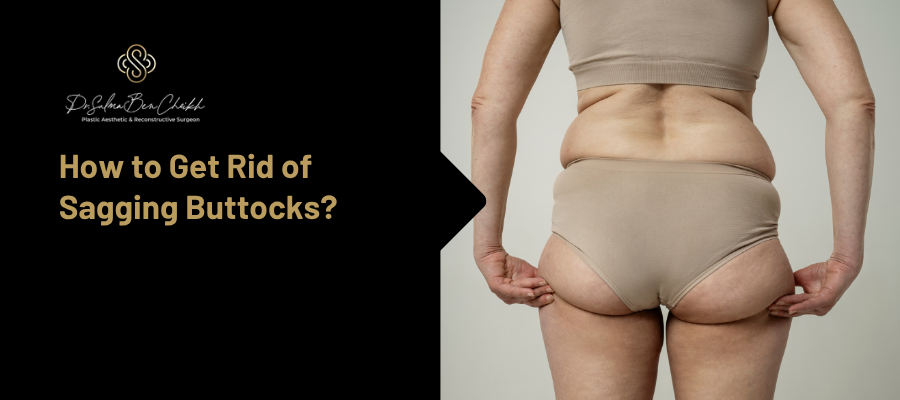
Changes in body shape can be unsettling, especially when they affect areas that define your overall silhouette.
One common concern many patients raise during consultations with Dr. Salma Cheikh in Dubai is sagging buttocks. Whether it develops gradually with age or appears after significant weight loss, the change can impact clothing fit, posture, and self-confidence.
Understanding why sagging buttocks occur and, more importantly, how to address them safely and effectively, is the first step toward improvement. In this blog, we will explore the causes, symptoms, treatment options, and realistic expectations for patients considering correction.
Why Does the Buttocks Area Start to Sag?
A saggy butt refers to a loss of firmness and upward projection in the gluteal area. A saggy and loose butt refers to the tissue no longer appearing rounded and lifted, the tissues descend, leading to skin laxity and flattening.
The most common causes include:
- Ageing: After the age of 30, collagen production declines steadily. Collagen is essential for skin elasticity and structural support.
- Sagging buttocks after weight loss: Significant weight reduction, particularly after bariatric surgeries or dieting, leaves excess skin behind.
- Reduced muscle tone: A sedentary lifestyle weakens the gluteal muscles.
- Hormonal changes: Fluctuations can affect skin quality and disturb fat distribution.
- Genetics: Some individuals naturally have less gluteal projection.
Globally, studies suggest that skin elasticity decreases progressively with age due to collagen breakdown, and body contour changes are common after substantial weight loss. These factors collectively work together and lead to sagging buttocks in many adults.
Symptoms and Physical Signs of Sagging Buttocks
Patients typically notice:
- Loss of volume or flattening
- Loose, hanging skin
- Reduced firmness
- Downward displacement of the buttock crease
- Skin folds in the lower buttock region
In moderate to severe cases, the skin may appear deflated, particularly in individuals who have experienced major weight changes.
How is Sagging Buttocks Evaluated?
A proper consultation with Dr. Salma Cheikh includes:
- Assessment of skin elasticity
- Evaluation of muscle tone
- Measurement of fat distribution
- Review of medical history and weight stability
Photographic documentation may also be taken to assess sagging buttocks before and after results over time.
Book An Appointment
How to Get Rid of Sagging Buttocks?
Managing sagging buttocks depends largely on the severity of skin laxity, muscle tone, fat distribution, and overall body weight stability. Treatment options are broadly divided into non-surgical and surgical options.
Non-surgical options
Non-surgical options are most effective and tend to work best when the skin still has some natural firmness, and the concern is mainly mild looseness or decreased muscle tone, rather than significant excess skin.
1. Targeted gluteal strengthening exercises
When patients want to improve sagging buttocks without surgery, the discussion usually starts with guided strength training. A well-planned exercise routine focused on the gluteal muscles is typically the first step. Exercises such as:
- Squats
- Lunges
- Hip thrusts
- Glute bridges
- Step-ups
These movements strengthen the gluteus maximus, medius, and minimus muscles, which contribute to lift and projection. While exercise cannot remove loose skin, it can improve contour and provide subtle lifting in early cases.
Consistency is essential. Visible improvement typically requires several months of disciplined training combined with adequate protein intake to support muscle growth.
2. Radiofrequency and skin-tightening treatments
Energy-based procedures like radiofrequency treatments deliver controlled heat to the deeper layers of the skin, encouraging the body to produce more collagen over time. Collagen is the structural protein that helps maintain skin firmness and elasticity, which are essential for a tighter, more toned appearance.
These treatments:
- Improve mild skin looseness
- Enhance skin texture
- Require multiple sessions
- Offer gradual and modest results
They are not effective for patients with significant excess skin, especially in cases of sagging buttocks after weight loss.
3. Injectable treatments
In select patients with volume loss but minimal skin excess, fat grafting (also known as fat transfer) may improve projection. However, it does not tighten loose skin. It is important to understand that adding volume without addressing skin laxity can sometimes worsen the drooping appearance.
Non-surgical treatments should be considered complementary rather than definitive solutions. They can enhance muscle tone and improve skin texture, but they are not a substitute for surgery when there is significant tissue laxity that requires structural tightening.
Surgical options
When there is clear skin redundancy, after substantial weight reduction, surgery can be the most appropriate and reliable option.
1. Butt lift surgery
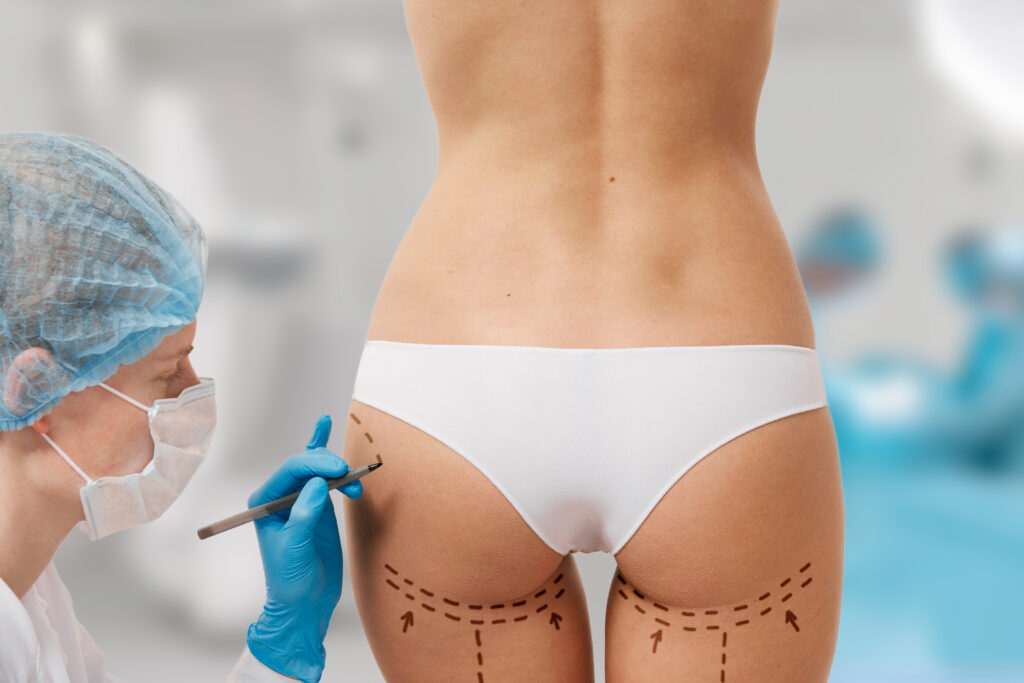
A butt lift particularly focuses on removing loose and excess skin along with repositioning tissues that have dropped over time. It can significantly improve the appearance of sagging buttocks, particularly for individuals who have experienced significant weight loss, as the skin often fails to tighten naturally even with a stable weight.
During the procedure:
- Excess skin is removed
- Underlying tissues are tightened
- The buttocks are repositioned to a higher, firmer contour
- Incisions are placed strategically to minimise visible scarring
Unlike volume-enhancing procedures alone, a butt lift corrects structural laxity. This makes it the most definitive answer to how to lift sagging buttocks when skin elasticity is significantly reduced.
Recovery typically involves:
- 2–3 weeks of restricted activity
- Wearing compression garments
- Avoiding prolonged pressure on the area
- Gradual return to exercise after medical clearance
Results are long-lasting if body weight remains stable.
2. Butt lift combined with fat grafting
In patients who have both skin laxity and volume loss, a combined approach may be recommended. After lifting and tightening the skin, purified fat (harvested from another body area) can be injected to restore projection.
This combination improves both:
- Shape
- Upper pole fullness
- Overall contour
It provides more comprehensive correction, particularly in patients seeking noticeable sagging buttocks before and after transformation.
Comparison of Treatment Options
Treatment type | Best for | Skin removal | Volume enhancement | Longevity |
Exercise | Mild laxity | No | No | Ongoing effort required |
Non-surgical tightening | Early skin looseness | No | No | Temporary improvement |
Surgical butt lift | Moderate to severe sagging | Yes | Optional | Long-lasting results |
How to Lift Sagging Buttocks After Weight Loss?
Patients who have undergone major weight reduction often ask how to firm sagging buttocks without surgery. Unfortunately, after a certain level, elasticity is lost, and natural tightening becomes difficult.
For post-weight-loss patients, surgery provides:
- Removal of redundant skin
- Improved contour
- Better clothing fit
- Enhanced comfort
Change in the weight must be constant for a longer duration, at least for months, before surgery to ensure predictable outcomes.
Risks and Recovery Expectations
Every surgical procedure carries risks. These may include:
- Swelling and bruising
- Temporary discomfort
- Scarring
- Rare complications such as infection or delayed wound healing
Recovery typically involves:
- 2–3 weeks of limited activity
- Avoiding prolonged pressure on the area
- Wearing compression garments
- Gradual return to exercise after medical clearance
Over time, as swelling resolves, most of the patients see progressive improvement.
Who is a Suitable Candidate?
Nanofat may be suitable for:
- Patients with early signs of skin ageing
- Individuals with fine wrinkles rather than deep folds
- Patients with acne scars or textural irregularities
- Those seeking natural rejuvenation using their own tissue
A detailed clinical assessment is necessary to determine suitability.
Practical Guidance Before Considering Treatment
If you are concerned about sagging buttocks:
- Maintain a stable weight
- Follow a balanced diet rich in protein to support tissue health
- Strengthen gluteal muscles consistently
- Seek consultation with a qualified plastic surgeon
Its best to avoid quick-fix treatments or unverified injections that may pose health risks.
Restoring Confidence Safely and Effectively with Dr. Salma Ben Cheikh
Sagging buttocks can result from ageing, weight loss, or reduced muscle tone, but effective solutions are available. While exercise may help in mild cases, moderate to severe laxity often requires surgical correction to achieve a meaningful lift.
A personalised consultation with Dr. Salma Ben Cheikh in Dubai ensures all your doubts and concerns are addressed carefully, and a treatment plan is designed based on the patient’s expectations.
With the right approach, natural-looking improvement and long-term contour enhancement are achievable.
About the Author
Dr. Salma Ben Cheikh, MD
Specialist Plastic Surgeon | MD, Medical School of Tunis, Plastic Reconstructive and Aesthetic Surgery | 12+ years of experience | DOH License No. – GD46470 | DHA License No.- 62492329 | MOH License No.- D78505
Dr. Salma Ben Cheikh is a board-certified specialist in plastic, aesthetic, and reconstructive surgery, recognized for her expertise in advanced cosmetic and reconstructive procedures in the UAE. With over 12 years of experience and international training in France and Tunisia, she combines surgical precision with a patient-first philosophy focused on natural, harmonious results.
Practicing in Dubai and Abu Dhabi, Dr. Salma specializes in facial rejuvenation, breast surgery, body contouring, aesthetic gynecology, and regenerative aesthetic treatments. Her approach emphasizes subtle enhancements, safety, and personalized care tailored to each patient’s unique anatomy and goals.
Trained at renowned institutions including Saint Louis Hospital Paris, Institut Gustave Roussy, and Paris-Saclay University, Dr. Salma brings advanced European techniques and artistic refinement to every procedure. She is fluent in Arabic, English, and French, helping patients from diverse backgrounds feel comfortable and confident throughout their journey.
Medical Disclaimer
This article is for informational purposes only and is not a substitute for professional medical advice, diagnosis, or treatment. Always seek the advice of a qualified health provider with any questions you may have regarding a medical condition.
Medically reviewed by Dr. Salma Ben Cheikh.